“Between stimulus and response, there is a space. In that space is our power to choose our response.” Viktor Frankl
Your Mindset Matters: A Weekly Newsletter

Welcome. Truly glad you’re here.
Every week, I bring you new ideas on mindset and personal development.
My hope is always the same.
That you find something in these pages that speaks directly to you.
Something that creates a moment of clarity about who you are,
what you believe, and what
might be quietly holding you back.
Your inner beliefs and values
are not background noise.
They are the architecture of your entire life.
They shape how you lead, how you connect,
how you see yourself,
and what you believe you deserve.
You can create a positive outlook and make a real change
in your world and in the world around you.
That work starts with awareness.
And it starts right here.

6 Rules for Emotional Health
That Actually Work
Nobody handed you a manual
when you were growing up.
No one sat you down and explained
how your mind works,
why you feel what you feel, or what to do when
your emotions start running the show.
You figured it out as you went. We all did.
The problem is that most of
what we figured out was wrong.
After 30 years of personal work,
recovery, studying Behavioral Science, and coaching executives
through some of the most challenging seasons of their lives,
I’ve landed on six rules that actually make a difference.
Not theory.
Not textbook psychology dressed up in motivational language.
Rules I use. Rules that work.
Rules anyone can apply starting today.
Here they are.
Rule 1: Stop Complaining. Start Noticing.
Complaining feels good
for about 30 seconds.
After that it becomes a habit.
And habits have a way of quietly taking over.
When complaining becomes your default response to difficulty,
something serious happens underneath.
Your brain starts scanning for problems instead of possibilities.
You begin to see everything
through a lens of what’s wrong,
what’s unfair, and what’s not working.
And here is the part nobody tells you:
chronic complaining erodes your self-confidence over time.
Not dramatically. Slowly.
The way water erodes stone.
The alternative is not pretending everything is fine.
It is noticing what is happening
without adding a story to it.
Something went wrong. That’s real.
Now what are you going to do about it?
That single shift, from complaining to noticing,
changes the entire direction
of your thinking.
Rule 2: Never Worry Inside Your Head.
Here is something I learned the hard way.
Your brain is an incredible machine.
But left unsupervised, it will run worst-case scenarios
on a loop
at 2am without your permission.
Worry is not the problem.
Everyone worries.
The problem is where you do it.
When worry lives inside your head
it multiplies.
One concern becomes three.
Three become ten.
Before long you are lying awake
solving problems that haven’t happened yet and may never happen at all.
Here is the rule:
worry on paper, never in your head.
The moment a worry surfaces,
write it down. Just that one worry.
Not the spiral that follows it.
The simple act of writing slows the thought down and takes away its power.
You cannot write as fast
as you can catastrophize.
That gap is where your calm lives.
Try it tonight. You will sleep differently.
Rule 3: Feel It.
Then Choose What to Do With It.
Most people do one of two things
with difficult emotions.
They either explode or they bury.
Neither works.
Exploding damages relationships and trust.
Burying creates pressure
that builds until it finds another way out.
There is a third option
that most people were never taught.
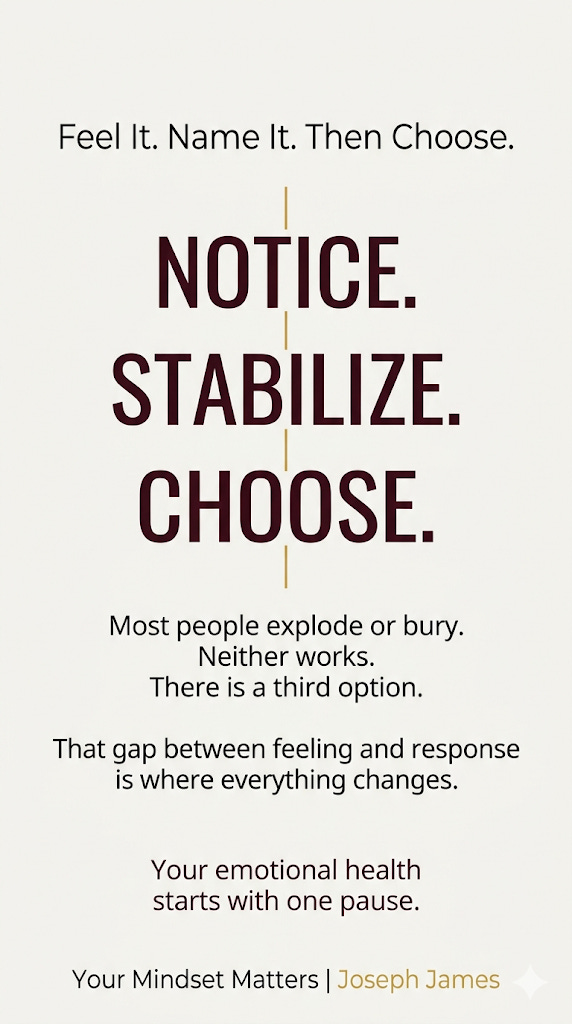
Feel it. Name it.
Then choose your next move consciously.
This is the foundation of my NSC Framework.
Notice. Stabilize. Choose.
When something triggers a strong emotion, pause long enough
to notice what you are actually feeling.
Not what you think you should feel.
What you actually feel.
Name it without judgment.
That single act of naming an emotion reduces its intensity immediately.
Neuroscience backs this up completely.
Then stabilize. Take a breath.
Create a moment of space
between the feeling and the response.
Then choose. Not react. Choose.
That small gap between stimulus
and response is where
your emotional intelligence lives.
It is also where your leadership lives.
Rule 4: You Are Not Your Circumstances. You Are Your Response.
I want to tell you something
that took me a long time to understand.
What happens to you
does not define you.
I spent years believing the opposite.
That my past, my mistakes,
my struggles, were the story.
That I was permanently shaped
by everything that had gone wrong.
Recovery taught me something different.
Behavioral Science confirmed it.
And 30 years of coaching
has proved it over and over again.
You are not defined
by what you have been through.
You are defined
by what you choose to do next.
This is not about ignoring your history.
Your history matters. It shaped you.
But it does not own you.
The executive who lost a company
and built a better one.
The leader who hit rock bottom
and came back clearer and stronger.
The person who carried shame
for decades and finally put it down.
None of them changed their past.
They changed their response to it.
That option is always available to you.
No matter what happened.
No matter how long ago.
Rule 5: Create More Than You Consume.
This one will make you uncomfortable
if you are honest about it.
How much of your day is spent
absorbing other people’s content, opinions, news, and noise?
And how much is spent creating,
thinking, building, and contributing something of your own?
Most people consume
far more than they create.
And over time that imbalance produces
a quiet restlessness that is hard
to name but impossible to ignore.
Here is what I have noticed in the executives I coach.
The ones who feel most stuck
are often the ones who
have stopped making things.
Stopped writing.
Stopped thinking out loud.
Stopped building anything that did not have an immediate return on investment.
Creation is not just productive.
It is restorative.
It does not have to be a business.
It can be a journal.
A conversation that goes somewhere real.
A decision you make deliberately
instead of by default.
Start somewhere. Create something.
Watch what happens to your energy.
Rule 6: Solve the Real Problem.
This is the one that changes everything.
Most people are incredibly busy
solving the wrong problems.
They optimize their morning routine when the real problem is
a belief that they are not capable of the next level.
They read another book on leadership
when the real problem is a fear of being seen.
They stay busy, productive, and exhausted,
when the real problem is that they are avoiding
one honest conversation with themselves.
Your mind is brilliant at creating decoys.
Fake problems that look urgent and feel important
but exist primarily to keep you away from the real issue underneath.
In my work this is where the NSC Framework does its deepest work.
When you slow down enough to notice what is actually happening,
not what appears to be happening,
the real problem almost always reveals itself.
And here is the thing about real problems.
They are almost always simpler
than the decoys surrounding them.
Not easier. Simpler.
One honest question.
One moment of clarity.
One decision to stop managing around the real issue and actually address it.
That is where everything changes.
The Through Line
Look back at all six rules
and you will notice something.
Every single one comes back
to the same thing.
Awareness.
Not positive thinking.
Not motivation. Not pushing harder.
The simple, courageous act of paying attention
to what is actually happening in your own mind
and choosing your response deliberately.
That is emotional health.
And it is available to every single person reading this right now.
Including you.
READY TO GO DEEPER?
These six rules are a starting point.
But awareness without application
only goes so far.
If you are ready to do the real work,
to identify the patterns running in the background
and build the clarity, confidence,
and consistency your next level requires,
I want to talk to you.
My 12-week private intensive,
Unstuck and Unshakable,
is built specifically for executives
who are done circling the same problems and ready to address the source.
Reply to this newsletter with the word READY
and let’s have an honest conversation about where you are
and where you want to be.
No pressure. No pitch. Just clarity.
Your Mindset Matters
Joseph James
Executive Mindset and Performance Coach
Found this useful?
Forward it to a leader who needs it.

ACTION STEP FOR THE WEEK
Read through all six rules and pick the one that made you stop.
Not the easiest one. The one that landed a little too close to home.
Write it down. Sit with it for 24 hours before you do anything else.
Awareness always comes before change.
TIP OF THE WEEK
When a strong emotion surfaces today, try this before you respond.
Name it out loud or on paper.
Angry. Anxious. Frustrated. Disappointed.
Just the word. Nothing else.
Notice what happens to the intensity of the feeling the moment you name it.
That is your nervous system regulating itself in real time.
That is the NSC Framework in action.
QUOTE OF THE WEEK
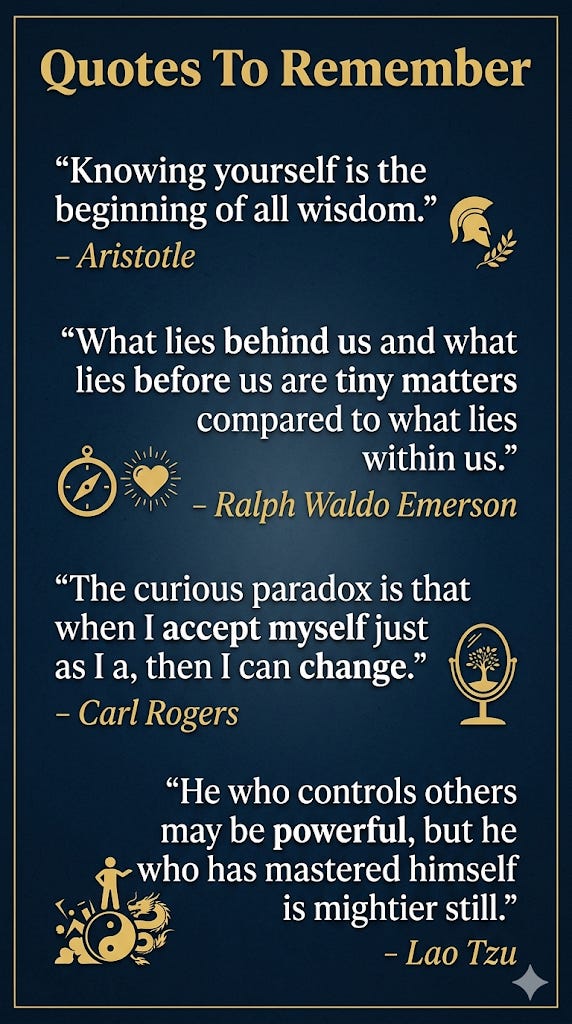
“We cannot solve our problems with the same thinking we used when we created them.”
Albert Einstein
Book Of The Week
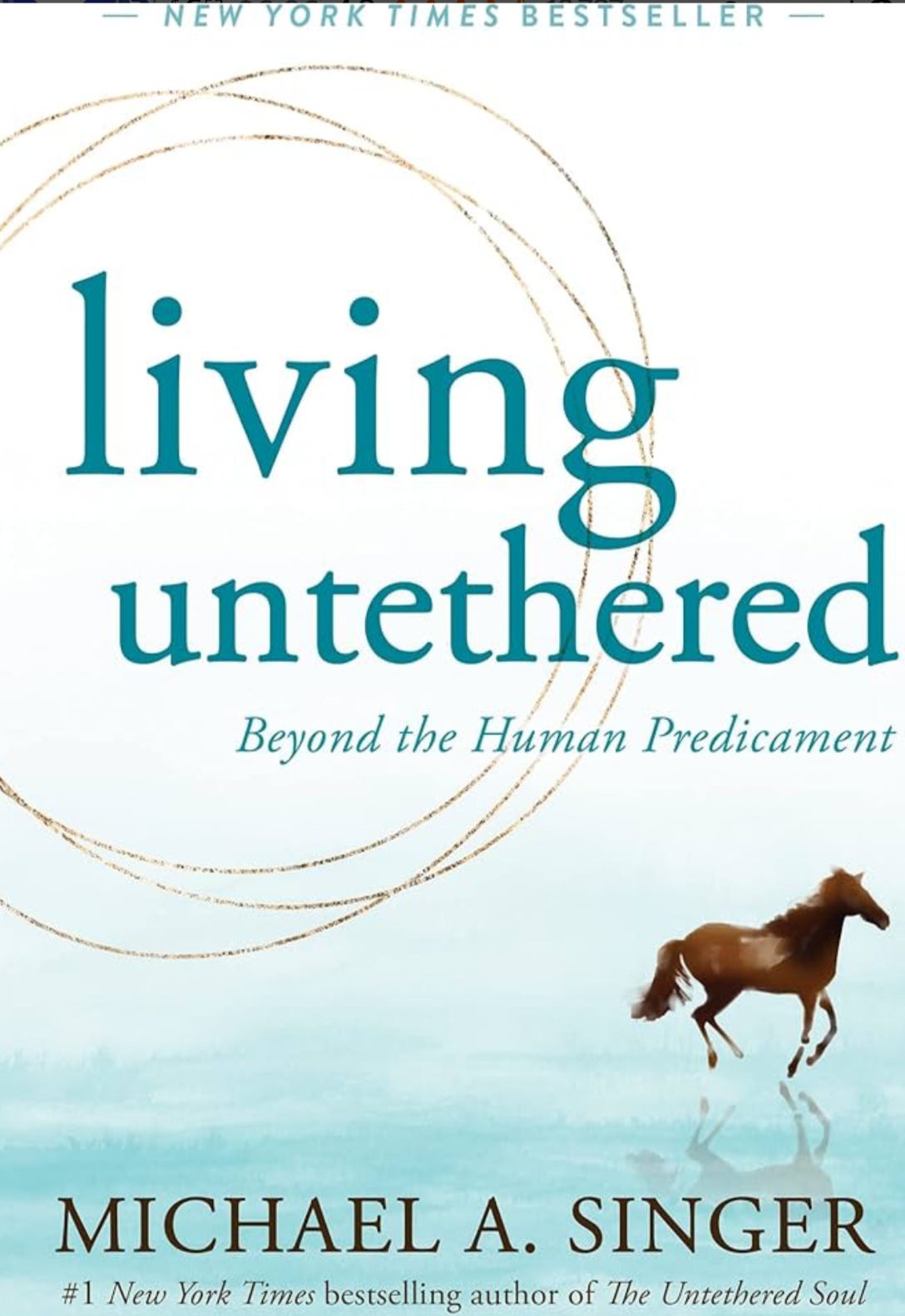
The Untethered Soul by Michael Singer
Most books tell you
to change your thoughts.
This one asks a more interesting question:
who is the one noticing
the thoughts in the first place?
Singer guides you to the quiet awareness sitting
underneath the constant mental chatter.
The part of you that observes the worry without being the worry.
The part that notices the emotion without being swept away by it.
For anyone working to build the awareness these six rules depend on,
this book is a clear, accessible, and surprisingly practical guide.
It pairs perfectly with everything in today’s issue.
QUESTION TO SIT WITH THIS WEEK
Which of the six rules are you breaking most consistently?
And what has that pattern cost you?
🚪 Step Into the Inner Circle
You’re here because you want more than surface-level motivation.
Becoming a Founding Subscriber isn’t just about reading my work;
It’s about choosing growth, clarity, and deeper thinking every single week.
Here’s what you unlock:
• Unfiltered insights — the kind that don’t make it to social media.
• Mental reset tools — practical steps to steady your mind when life feels heavy.
• Growth prompts — designed to help you think sharper, lead stronger, and create change with intention.
If this message hits home, don’t just nod and scroll.
👉 Join now as a Founding Subscriber
and make this the turning point where you start living with clarity, not chaos.
👉 Claim your spot as a Founding Subscriber
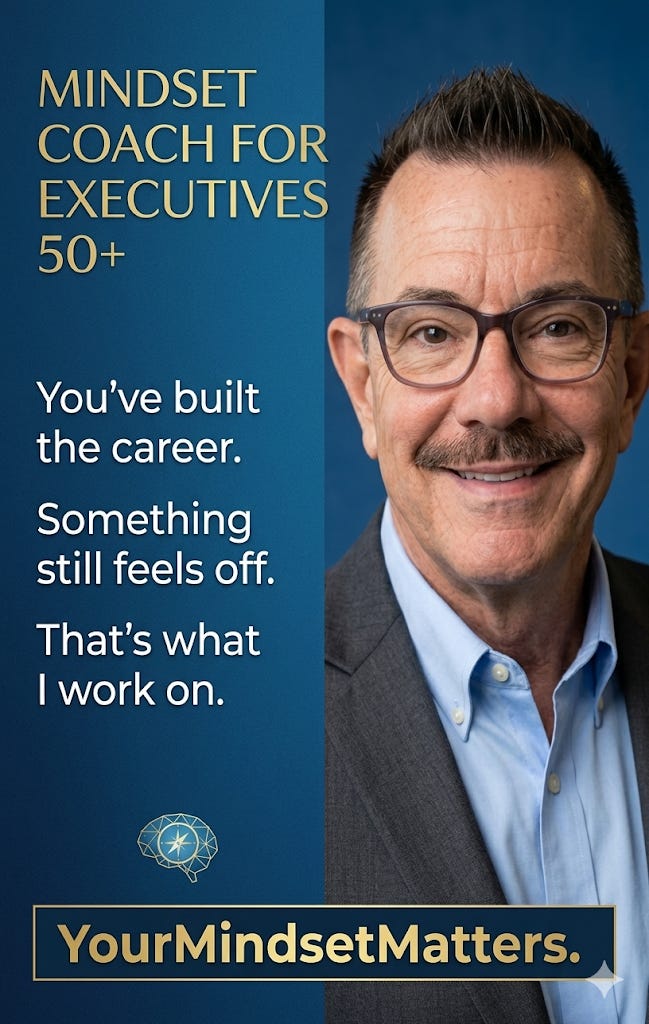
Executive Mindset Coach
Helping executives
eliminate decision fatigue, burnout
and start leading with mental clarity.
Rewire the neural pathways
sabotaging their leadership,
so adaptive decision-making, clarity,
and confidence becomes automatic.
12-week Mindset Rewire
Unstuck and Unshakable
Your Mindset Matters.
Join me on LinkedIn
Closing Thought
I want to leave you with this.
The work I do today, the coaching, the writing,
the conversations, it all started with one decision.
The decision to look honestly at what
was running in the background of my own life.
That decision changed everything for me.
Not overnight.
Not without discomfort.
But completely.
You picked up this newsletter for a reason.
Something in you is ready to look.
Ready to question.
Ready to build something different from the inside out.
That instinct is worth trusting.
Your mindset is not your enemy.
It is simply waiting to be examined.
And the moment you start examining it,
everything becomes possible.
I’m grateful you’re here.
See you next week.